


To fight Ebola, African religious leaders draw safe practices road map


NAIROBI, Kenya (RNS) African church leaders, theologians and health professionals have drawn up a road map they hope might help ease stigma and educate faith communities in the fight against Ebola.
The virus has killed more than 5,000 so far and has been declared a global security threat by the U.N.
The road map, drawn at a three-day conference that ended Wednesday (Nov. 26) in Nairobi and was attended by 70 religious and health care leaders, highlights the role faith groups can play as part of the global response, according to church leaders.
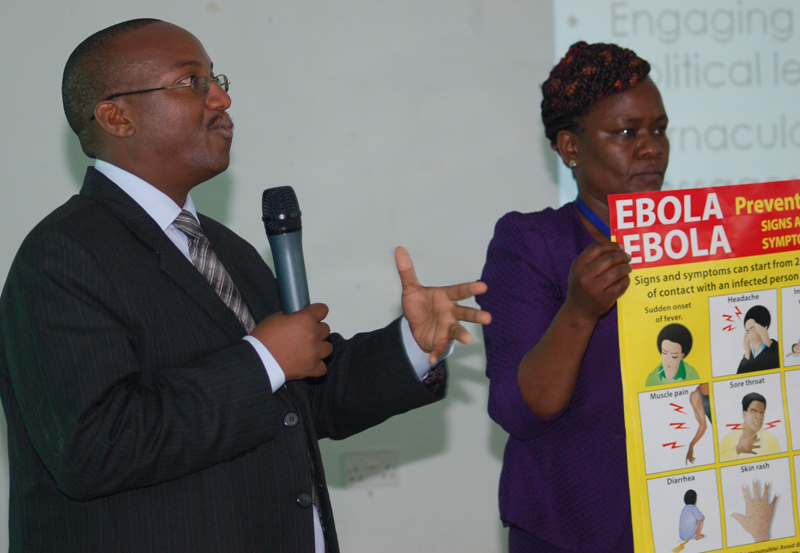
Dr. Ian Njeru from Kenya’s Ministry of Health explains to religious leaders, theologians and health professionals how Ebola is spread. He spoke at a conference in Nairobi, Kenya. The Rev. Pauline Njiru, the Eastern African coordinator of the Ecumenical HIV and AIDS Initiative in Africa, holds a poster about Ebola prevention. Religion News Service photo by Fredrick Nzwili
“We were taken by surprise by the crisis,” the Rev. Andre Karamaga, All Africa Conference of Churches general secretary, told participants at the gathering organized by the World Council of Churches.
The road map includes, among other items, actions to fight stigma, discrimination and misinformation and a retooling of burial practices to ensure religious communities burying their dead are using safe practices to avoid infection.
Karen Sichinga of Zambia’s Churches Health Association said people from the affected countries are pleading with other nations to stop stigmatizing them over Ebola. Such stigma has impeded travel and imposed hardships on children whose parents died of the disease.
“If we continue with stigma, it will complicate the issue,” Sichinga said.
Participants also wanted to ensure the faith communities have a voice in national and international platforms.
Susan Parry, program executive for health and healing at the WCC, said that while the international community has mounted a response to the virus, ensuring a united faith community response is critical.
“They are the gatekeepers to communities,” she said. “We will be strengthening interfaith relations because no one person can deal with this alone.”
YS/AMB END NZWILI