


Grief without God is a challenge for nonbelievers
(RNS) If you're an atheist who loses a child or loved one, there's no hope of a reunion in the afterlife. The absence of the comfort of religious ritual is one of the hardest adjustments for unbelievers, leading some nonbelievers to craft support groups and resources for grief without God. By Kimberly Winston.
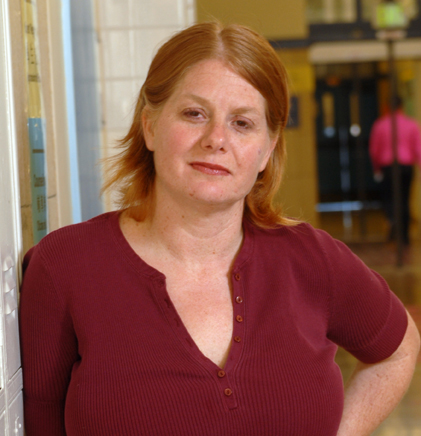


Rebecca Hensler started a support group for grieving atheists to help them deal with loss and death without religion.
BERKELEY, Calif. (RNS) When Rebecca Hensler's infant son died in 2009, she received numerous condolences from friends, colleagues and even total strangers she met online.
She knew their intentions were good, but their words weren't always helpful. And in the rawness of her grief, Hensler found some of them downright hurtful.
Hensler is an atheist, so when people described her three-month-old son Jude as being an angel, or part of God's plan, or “in a better place” than in his mother's arms, the pain sometimes overwhelmed her.
“(Atheists) don't think we are going to get to hold our children again,” Hensler told a group of about 30 members of the East Bay Atheists, a monthly gathering of nontheists, where her descriptions of people's visions of her son as an angel drew a few gasps.
“We are facing an absolute loss, so when someone projects onto that the idea that we are going to be able to hold our children again or communicate with them, it is essentially dismissing the magnitude of that loss.”
As the atheist community grows and matures, one thing people are looking for is a way to process grief and sorrow without the trappings — or support — of religious ritual and belief.
For nonbelievers, John Lennon's famous bid to “imagine there's no heaven” isn't just a lyric; it's reality. And it's not always easy.
Last year, Hensler founded “Grief Beyond Belief,” a Facebook page where unbelievers can share their grief and loss in what she describes as “a safe place” devoid of God-talk.
Within eight days, Grief Beyond Belief garnered 1,000 “likes,” a number that is now approaching 3,000. Hensler estimates there are about 150 users on the site each day.
A 43-year-old school counselor, Hensler tries to post something every day — a link, a picture, a question, a thought. Recent topics include a discussion of travel as a balm for pain, a look at how agnostics grieve, and a link to a “Bill of Rights for the Grieving.” Right No. 7: “You have the right not to be grateful, reasonable, inspired or inspiring.”
The idea that nonbelievers need their own places to grieve is gaining traction in the atheist arena. The book “Godless Grief” by Cathe Jones appeared in 2009; Atheist Nexus, an online community of nontheists, established a grief support group last year; and in recent months a handful of atheist bloggers have taken up the topic.
“When I became an atheist, death was one of the hardest issues I had to deal with,” said Greta Christina, a prominent atheist activist who encouraged Hensler to establish Grief Beyond Belief.
“I didn't know about atheist writings or communities that could help me through it. … I don't want anyone else to have to go through that alone.”
Rabbi Peter Schweitzer, leader of New York's City Congregation for Humanistic Judaism, which has long held secular funeral services, said grief is a universal experience that requires different responses.
“Secular people feel as racked with sorrow as the next person,” he said. “Christians mourn differently than Jews who mourn differently than Muslims. There ought to be space for those who don't share religious beliefs to mourn, too.”
Speaking before the Berkeley group, Hensler said she became sure there was a need for a completely secular grief site when she began an online conversation with a former Christian minister who first lost his faith and then his two teenage sons.
An acquaintance told him the boys' deaths were punishment for his atheism. That drew gasps from the Berkeley group, too. Hensler said she hoped Grief Beyond Belief would become a place where isolated or new atheists, like the former pastor, could find comfort and support.
Maintaining a space for atheists requires some rules. Hensler polled its users and crafted some guidelines — thoughts and feelings about loss are welcome; prayer and discussions of the afterlife are not. Anyone “living without religious belief” is welcome, as are those who are questioning their faith — as long as they don't start a debate.
Hensler described the rules as “a delicate balance.”
“It means accepting that I am not going to be able to make everyone happy at the same time,” she said. “That is one of the things I had to let go of — that I was going to create a website that was exactly right for everyone.”
It also means her own loss remains immediate.
“I am constantly exposed to other people's grief, and that isn't always easy,” she said. “There are things I post but don't read because it is too close to my own experience. I think that is why Grief Beyond Belief is eventually going to have to be a group project.”
Hensler would like to see more secular, local grief support groups specifically for atheists.
“There are plenty of people who are secular counselors who could be facilitating these groups,” she said after her talk. “But they don't necessarily know there is a population of people who are longing for that kind of support, free of religious content.”
Meanwhile, she told the Berkeley group, she has found an online home.
“It has given some meaning for me to the death of my son,” Hensler said. “I certainly don't believe there is anyone out there with a plan, or that everything happens for the best. But I do believe it is possible to create meaning from tragedy.”