


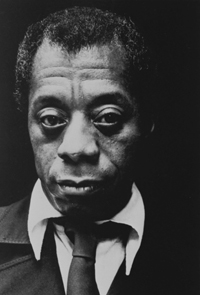


Sunday's (Feb. 26) “Day of Solidarity for Black Nonbelievers, will include a remembrance of African-American atheists of the past, including:
— James Baldwin (1924-1987), poet, playwright, civil rights activist
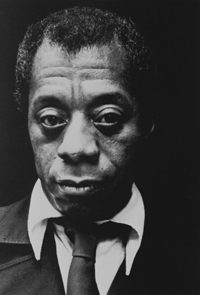
James Baldwin, poet, playwright and Civil Rights activist. Baldwin, once a Pentecostal preacher, never publicly declared his atheism, but was critical of religion.
Once a Pentecostal preacher, Baldwin's 1963 book, “The Fire Next Time,” describes how “being in the pulpit was like being in the theatre; I was behind the scenes and knew how the illusion worked.” Baldwin never publicly declared his atheism, but he was critical of religion. “If the concept of God has any validity or any use,” he wrote, “it can only be to make us larger, freer, and more loving. If God cannot do this, then it is time we got rid of him.”
— W.E.B DuBois (1868-1963), co-founder of the NAACP

W.E.B. du Bois, co-founder of the NAACP. Du Bois described himself as a freethinker and was sometimes critical of the black church.
Columbia University professor Manning Marable wrote that DuBois' 1903 work, “The Souls of Black Folk,” “helped to create the intellectual argument for the black freedom struggle in the 20th century.” DuBois described himself as a freethinker and was sometimes critical of the black church, which he said was too slow in supporting or promoting racial equality.
— Lorraine Hansberry (1930-1965), playwright and journalist
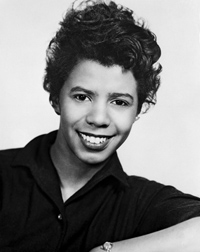
Lorraine Hansberry, playwright and journalist, was most famous for her partly autobiographical play, “A Raisin in the Sun.”
Hansberry's partly autobiographical play “A Raisin in the Sun,” shocked Broadway audiences when a black character declared, “God is just one idea I don't accept. … It's just that I get so tired of him getting credit for all the things the human race achieves through its own stubborn effort. There simply is no God! There is only man, and it's he who makes miracles!” She worked with W.E.B. DuBois and Paul Robeson on an African-American progressive newspaper, but her life was cut short at age 34 by cancer.
— Hubert Henry Harrison (1883-1927), activist, educator, writer
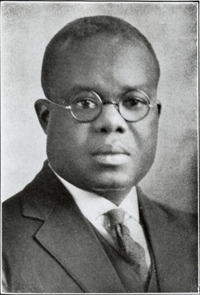
Hubert Henry Harrison promoted positive racial consciousness among African Americans and proudly declared his atheism.
Harrison promoted positive racial consciousness among African-Americans and is credited with influencing A. Philip Randolph and the godfather of black nationalism, Marcus Garvey. Harrison proudly declared his atheism and wrote, “Show me a population that is deeply religious and I will show you a servile population, content with whips and chains, … content to eat the bread of sorrow and drink the waters of affliction.”
— A. Philip Randolph (1889-1979), labor organizer
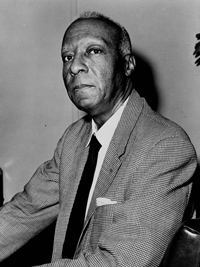
A. Philip Randolph was the co-leader with Martin Luther King of the 1963 March on Washington and was the founder of the Brotherhood of Sleeping Car Porters, the first predominantly black union.
Randolph was the founder of the Brotherhood of Sleeping Car Porters, the first predominantly black union. He helped convince President Franklin Roosevelt to desegregate military production factories during World War II, and organized the 1963 March on Washington with the Rev. Martin Luther King Jr. In 1973, Randolph signed the Humanist Manifesto II, a public declaration of Humanist principles. He is reported to have said of prayer: “Our aim is to appeal to reason. … Prayer is not one of our remedies; it depends on what one is praying for. We consider prayer nothing more than a fervent wish; consequently the merit and worth of a prayer depend upon what the fervent wish is.”
— Carter G. Woodson (1875-1950), journalist and historian
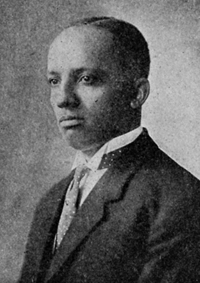
Carter G. Woodson was a journalist, historian and the founder of Black History Month, which evolved from his first idea of “Negro History Week.”
In 1926, Woodson proposed “Negro History Week,” which later evolved into Black History Month. In 1933, he wrote in “The Mis-Education of the Negro” that “the ritualistic churches into which these Negroes have gone do not touch the masses, and they show no promising future for racial development. Such institutions are controlled by those who offer the Negroes only limited opportunity and then sometimes on the condition that they be segregated in the court of the gentiles outside of the temple of Jehovah.”
— Richard Wright (1908-1960), novelist and author
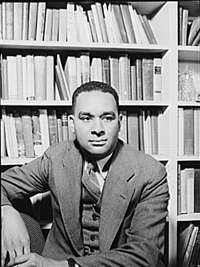
Richard Wright, best known as a novelist, wrote a memoir entitled “Black Boy.”
In his memoir “Black Boy,” Wright wrote, “Before I had been made to go to church, I had given God's existence a sort of tacit assent, but after having seen his creatures serve him at first hand, I had had my doubts. My faith, as it was, was welded to the common realities of life, anchored in the sensations of my body and in what my mind could grasp, and nothing could ever shake this faith, and surely not my fear of an invisible power.”